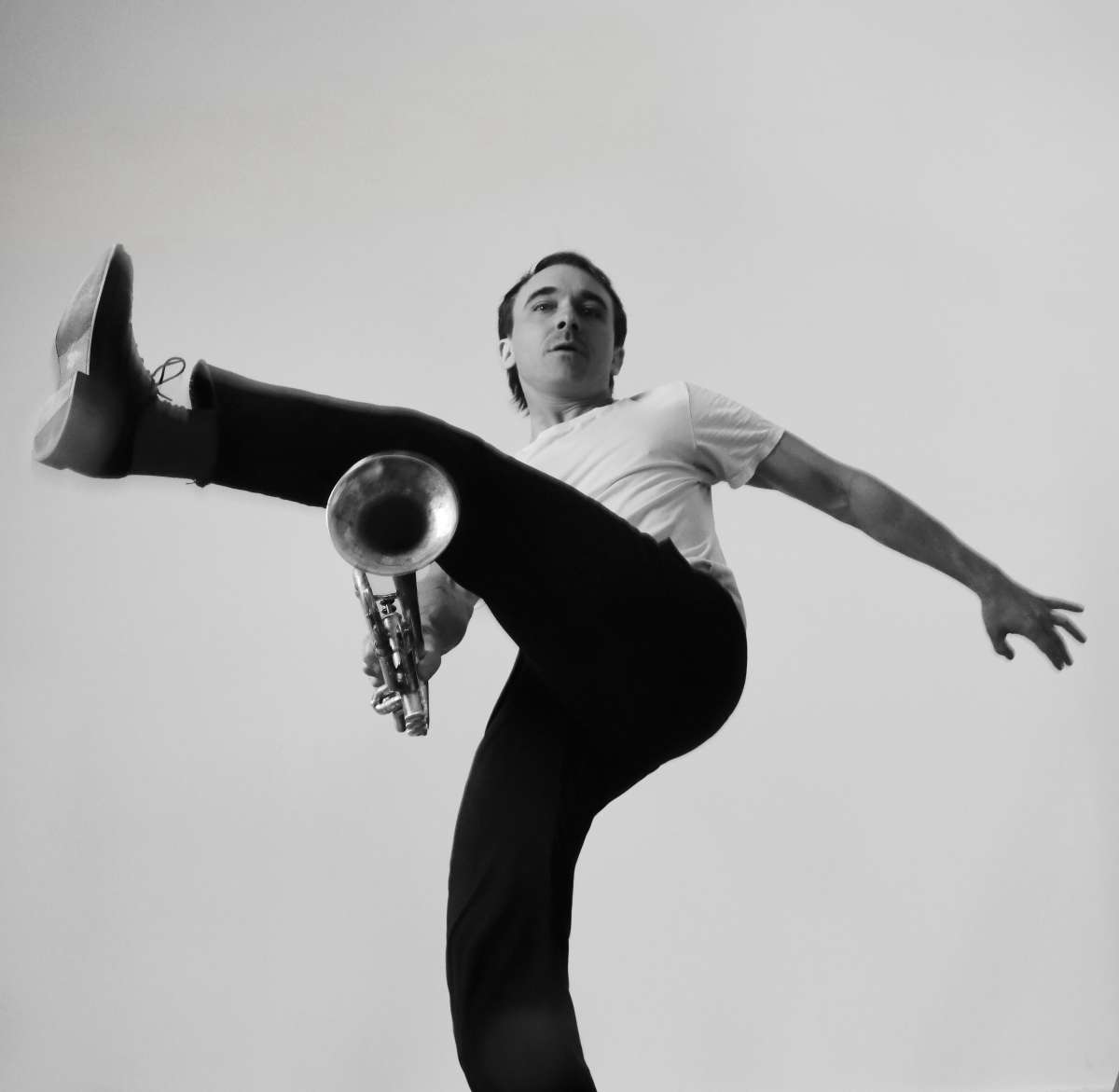
Globe Hall Presents Tōth (of Rubblebucket) with William Alexander on Thursday, October 15th. – KITCHEN OPENS AT 5PM!
Tōth’s paradoxical third album, And The Voice Said is a prayer to be able to pray, a meditation on why he meditates, a collection of jokes about what he holds sacred.
“I’ve always felt conflicted about my spiritual strivings,” Tōth explains. “I never wanted to identify as a Buddhist because Buddhism is supposed to be about non-identity. There’s a classic Buddhist line: ‘If you see the Buddha, kill the Buddha!’ This album is my attempt to kill the Buddha.”
Toth’s path to this album has been anything but linear. After early struggles with addiction and run-ins with the law, Toth found salvation in music, co-founding Rubblebucket in college and building a joyful collective that became his lifeline. Getting sober while navigating a very public breakup and maintaining the creative partnership taught him that spiritual seeking isn’t about transcendence – it’s about staying. With Rubblebucket on indefinite hiatus, Tōth is ready to focus his full energy on his solo work: music that doesn’t bypass the messy human work of choosing life, choosing love, choosing embodiment.
For a character as enigmatic as Tōth, “killing the Buddha” might mean closing their shows with audience-wide singalongs of the mantra “Open your heart to the universe.”
“It’s hard to explain in theory,” Tōth says, laughing. “But in the room, everyone seems to understand. It’s an absurd and joyous thing to sing. For many reasons most of us need that message. Not to be lofty but there’s way too much hate and violence in the world and it starts with the closing of our individual hearts. My personal default can be so negative and self-loathing and it feels nice to sing something I need to hear.”
That duality – humor and holiness, irony and sincerity – runs through the album, which features a duet with Kimbra and is co-produced by Grammy-nominated artist Caroline Rose.
He describes Rose as a kindred spirit, “deeply in touch with vibe and emotion but also a technician in every area of their life.” Rose brought the same meticulous energy to production as to fixing Feist’s car (which they worked on between album sessions). “They produce with that same energy.”
Across the album, Tōth swings between the buoyant self-reassurance of “Not Broken” to the spiraling doubt that follows, taps into the zeitgeist with “Ice Cream” and into his inner voices with “Triangle People.” His trumpet blares fanfare and alarm. As the record closes, he’s found a fragile kind of weightless, trembling peace.
It’s clear Tōth hasn’t killed the Buddha. His assassination attempts fail gloriously. The self and all its torment remains. But And The Voice Said leaves behind so much beauty that, for a moment, you might believe having a self isn’t so bad.