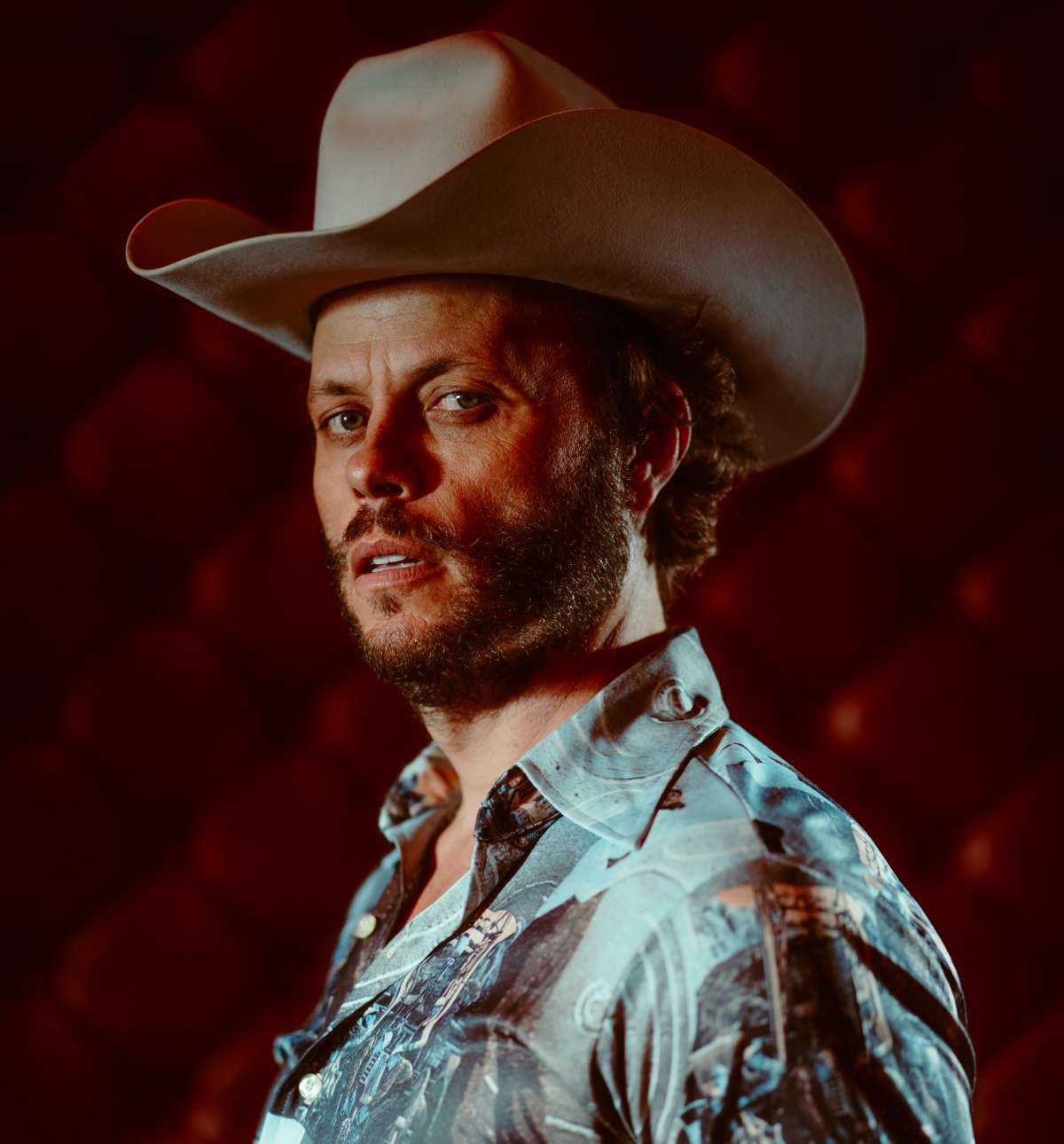
Long before Charley Crockett became country music’s modern-day antihero, challenging its artistic and business conventions, he was already living his life on the run. Sometimes he was doing the chasing — dreams of a better life or at least another song. And sometimes he was being chased — by the law or by his past. That constant motion let the San Benito, Texas, native spend more than 15 years sidestepping the conventions and rules that govern the music industry. Crockett has been branded an outlaw by Nashville the way Willie Nelson and Waylon Jennings were before him, and he’s OK with that. “It’s those guys that break the rigid system to where, finally, a country boy, he’s still not getting a good deal, but at least he’s got creative control,” he says.
Crockett released his highly-anticipated and highly-controversial album, Clovis in July via Atlantic Outpost. It was recorded with his friend and producer, Shooter Jennings, at the historic Norman Petty Studios in Clovis, New Mexico, where Buddy Holly recorded most of his groundbreaking catalog and helped usher in the golden era of American rock and roll. Crockett, along with his band, The Blue Drifters, recorded Clovis in the same analog studio setting that Holly’s signature tunes were cut. “I felt like there was a lot of unfinished business in that studio,” Crockett says. One of Holly’s best-known understudies was Shooter’s father, the late Waylon Jennings, who himself recorded at the Norman Petty Studios. In that respect, Clovis represents a full-circle moment in the lives of both Crockett and Shooter Jennings — who co-wrote 12 of the album’s songs. Only the instrumental title track Johnny Cash’s timeless “Don’t Take Your Guns to Town” came from outside their partnership.
Over the past two years, Crockett has pushed himself to break new ground, lyrically and musically. Clovis marks Crockett’s fourth LP since March 2025 and comes on the heels of April’s Age of the Ram, which completed the three-part Sagebrush Trilogy he recorded with Jennings at Sunset Sound Studio 3 in Los Angeles. The second record in the trilogy, Dollar a Day, was nominated for Best Traditional Country Album at the 2026 Grammy Awards — the second Grammy nomination for Crockett along with his Best Americana Album nomination for $10 Cowboy in 2025.
Often perceived as either country music’s last great hope or the biggest thorn in its side, Crockett’s path has been rocky and marked by detours. His “Gulf & Western” sound was fashioned after years of street busking in New Orleans or the New York City subways, hitchhiking on passing trains from one town to another, and nearly losing it all in brushes with the law.
In “Image of a Woman,” Crockett sings, “There’s a million dollar highway that keeps on calling me. It ain’t ever gonna make me rich, and I ain’t exactly free.” It’s a powerful lyric but an even better description of the man himself, and the way he forged one of the most passionate and loyal fanbases in all of modern country music — one show at a time, and with a ceaseless pursuit of the next song.